
Cloud Workload Protection Platform (CWPP)
Protect Your Cloud Workloads from Vulnerabilities
Secure your cloud workloads with continuous risk detection, unified visibility, and proactive workload protection across multi-cloud environments. CheckRed’s Cloud Workload Protection Platform (CWPP) helps organizations identify vulnerabilities, reduce attack surface exposure, and strengthen workload security across AWS, Azure, Google Cloud, and more — all from a single, unified platform built for modern cloud infrastructure.
Why Choose CheckRed’s CWPP?
In today’s rapidly evolving digital landscape, safeguarding cloud workloads is paramount. As organizations increasingly rely on cloud infrastructures, the complexity and scale of these environments can introduce vulnerabilities that traditional security measures may not adequately address.
Comprehensive Cloud Workload Protection
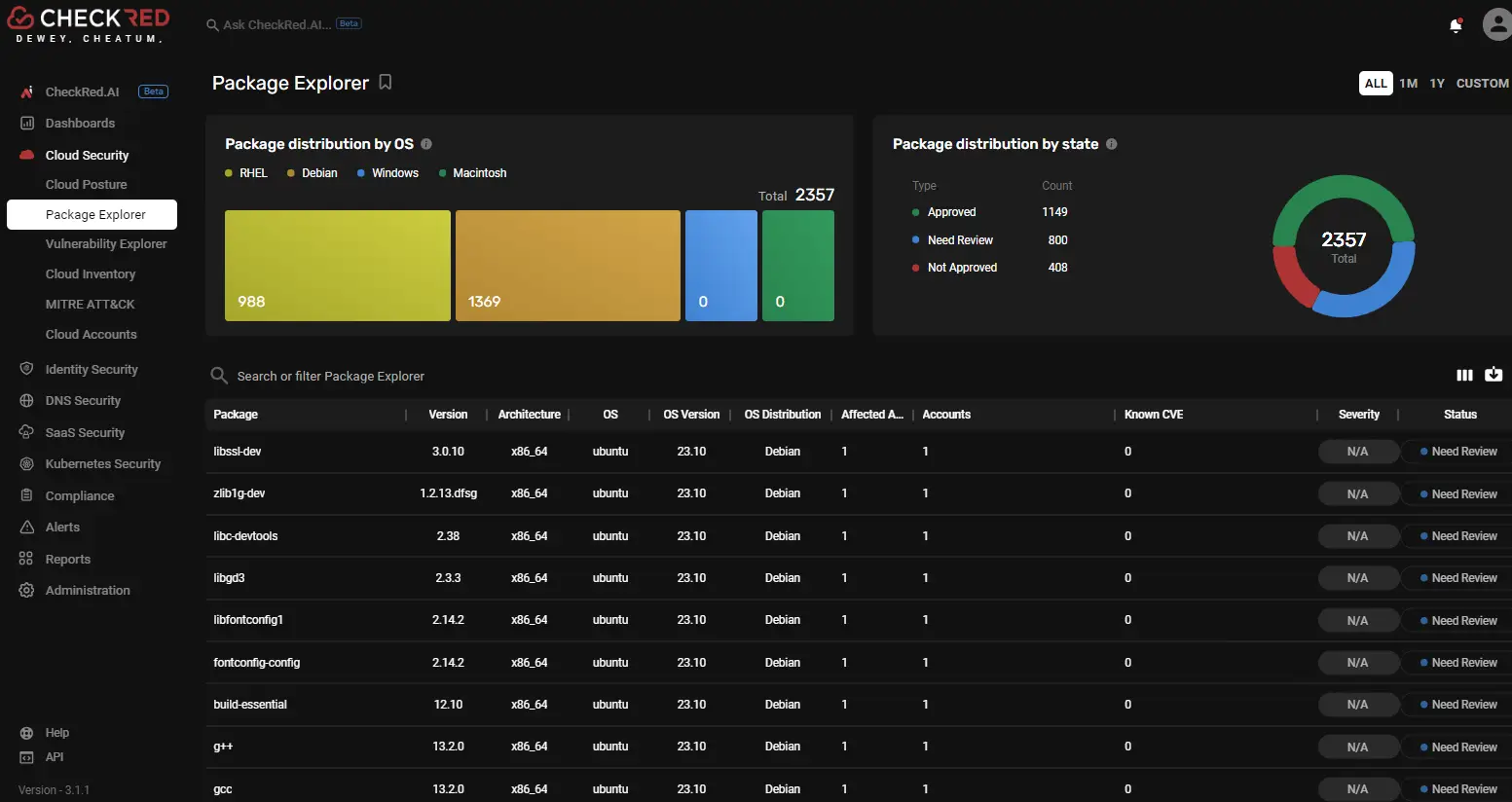
CheckRed’s CWPP delivers comprehensive workload protection by continuously identifying vulnerabilities, security risks, and misconfigurations across your cloud environments. The platform provides broad multi-cloud coverage with continuous monitoring, prioritized risk insights, and customizable remediation workflows to help security teams strengthen workload security and reduce exposure faster.
Scalable Workload Security for Dynamic Cloud Environments
CheckRed’s CWPP provides advanced risk detection and ensures visibility across all workloads, so your security team can track every interaction between applications and identities. Protect your workloads without compromising development speed.
CheckRed’s Approach to CWPP
Streamlined to prevent breaches before they happen

Visibility

Detection

Compliance Governance

Remediation

Reporting
Visibility
100% Workload Visibility
- Gain full visibility into your cloud workloads, user accounts, and runtime environments across AWS, Azure, Google Cloud, and Linode.
- Continuously monitor workload resources and detect suspicious activity with detailed security assessments and actionable insights delivered in minutes.
Detection
Continuous Risk Detection
- Quickly identify anomalies, unpatched software, insecure permissions, and vulnerable software dependencies.
- Detect fileless attacks, such as Pyloose, to prevent malware from infiltrating your workloads.
- Create custom policies to focus on your organization’s highest-priority risks.
Compliance
Ensure Regulatory Compliance
- CheckRed’s CWPP helps you adhere to compliance frameworks such as CIS, NIST, ISO, HIPAA, PCI-DSS, FedRAMP, MITRE, GDPR, and more.
- Customizable compliance frameworks help organizations identify gaps, streamline remediation, and maintain continuous governance with comprehensive reporting and ongoing compliance visibility.
Remediation
Contextualized Risk Remediation
- Prioritize risks with custom weights, compensatory workflows, and context
- Get control-based and CLI-based guided remediation instructions
- Utilize three types of remediation workflows – analyst, remediator, risk acceptance
- Encourage communication and collaboration with seamless platform integrations
Reporting
Detailed Reporting for Proactive Security
- Leverage customizable, in-depth reports in CSV, PDF, or Docx formats to analyze compliance violations, cloud risks, and SaaS security issues.
- Gain actionable insights to establish a proactive, preventive security strategy for your cloud workloads.
Strengthen Your Cloud Security with CheckRed’s CWPP
CheckRed’s CWPP delivers comprehensive protection for cloud workloads across hybrid and multi-cloud environments. Continuously identify vulnerabilities, enforce compliance policies, and reduce security risk with unified visibility, continuous monitoring, and automated remediation workflows. Speak with a CheckRed expert today to see how the platform can help strengthen and secure your cloud infrastructure.
Subscribe to the Cybersecurity Breakdown
What attackers see. What security teams miss. Get monthly insights on DNS, SaaS, cloud, identity, compliance, and emerging cyber threats.
Frequently Asked Questions
What is a Cloud Workload Protection Platform (CWPP), and what are its primary functions?
A Cloud Workload Protection Platform (CWPP) is a security solution designed to protect workloads across cloud environments, including virtual machines, containers, Kubernetes environments, and serverless applications. CWPP solutions help organizations secure cloud workloads throughout their lifecycle by continuously identifying vulnerabilities, monitoring configurations, and enforcing security and compliance policies.
Core CWPP capabilities typically include vulnerability management, workload monitoring, compliance validation, threat detection, and automated remediation workflows. By reducing attack surface exposure and improving visibility across multi-cloud environments, CWPP platforms help organizations strengthen cloud security posture, manage risk more effectively, and maintain compliance with regulatory and internal security requirements.
Why is CWPP important for organizations using cloud services?
CWPP is essential for organizations utilizing cloud services because it addresses the unique security challenges associated with dynamic cloud environments. As businesses migrate to the cloud, they face increased risks due to the complexity and scale of these environments, including misconfigurations and unpatched vulnerabilities. CWPP solutions provide visibility and control over cloud workloads, enabling organizations to safeguard their data and applications against cyber threats.
How does CWPP differ from traditional security measures?
CWPP differs from traditional security measures by focusing specifically on the security needs of cloud workloads rather than general network or endpoint protection. While traditional security approaches often rely on perimeter defenses, CWPP emphasizes visibility and protection within the cloud environment, considering the cloud resources’ dynamic nature. CWPP solutions incorporate automation to monitor workloads and respond to real-time threats, whereas traditional methods may rely on static rules and manual interventions.