How an Exposed AWS Access Key Can Lead to Full Account Takeover
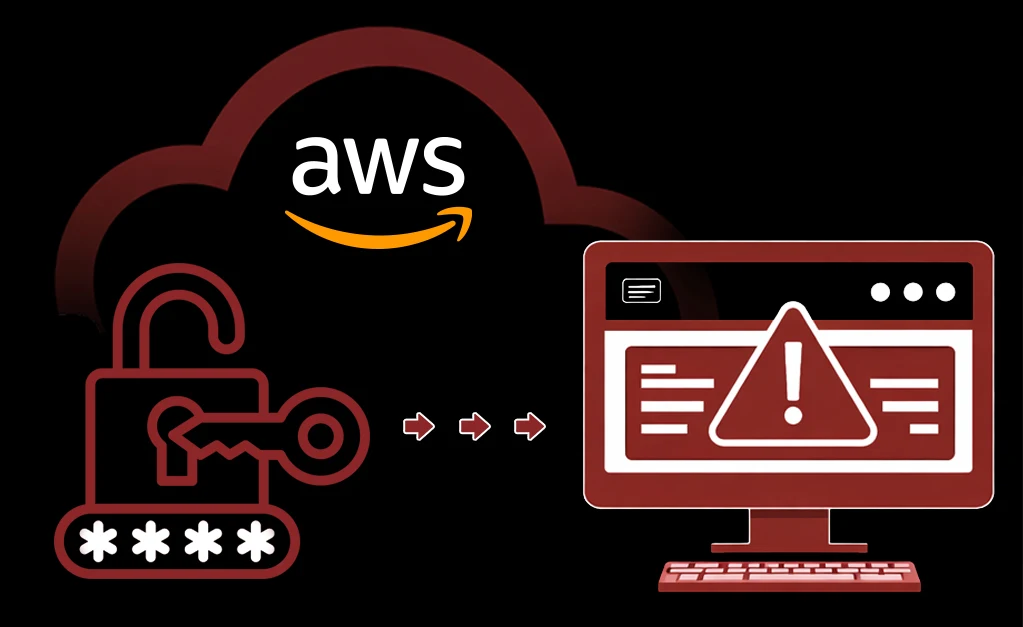
Cloud breaches rarely start with advanced exploits or unknown vulnerabilities. Most begin with something far more ordinary: a misconfiguration.
A recent real-world incident revealed how quickly a single exposed credential can compromise an entire cloud environment. Attackers discovered access keys stored in publicly accessible S3 buckets and escalated their way to full administrative control of an Amazon Web Services account in under ten minutes.
The takeaway is uncomfortable but clear: In cloud environments, small hygiene failures can escalate at machine speed.
The Root Cause Was Exposure–Not Complexity
The attack began when credentials were found in a public S3 bucket. These keys initially provided only read-only access, but that was enough.
From there, attackers:
- Manipulated existing Lambda functions
- Enumerated IAM roles and identities
- Escalated privileges
- Eventually gained admin rights.
This pattern is familiar to anyone familiar in cloud security:
- Public storage exposure
- Long-lived credentials
- Over-permissive identities
- Limited runtime monitoring
Each issue alone may seem minor. Together, they form a clear attack path.
Why Exposed AWS Access Keys Remain a Top Cloud Risk
Despite years of security guidance around least privilege and secure credential storage, exposed access keys remain one of the most common causes of cloud breaches.
Why?
Because they:
- Get embedded into scripts during development.
- Are copied into CI/CD pipelines
- End up in public repositories
- Sit forgotten in storage buckets
And once automated scanners discover them, exploitation is nearly immediate.
This is exactly why continuous cloud posture management matters. Security teams must continuously identify:
- Publicly exposed resources,
- Risky IAM policies
- Hard-coded or long-lived credentials
- Excessive role permissions.
But posture is only part of the story.
How Small Cloud Gaps Turn Into Full Account Takeover
What made this breach especially damaging wasn’t just the exposed credential—it was how quickly the compromise cascaded.
After gaining initial access, the attackers:
- Modified Lambda functions to assist with privilege escalation
- Enumerated identities and roles
- Moved laterally across multiple AWS principals
- Ultimately accessed an administrative account
Within minutes, they controlled the AWS environment.
This is what modern cloud attacks look like. They don’t rely on a single weakness. They exploit chains of small gaps: excess permissions, weak identity boundaries, and insufficient visibility into runtime behavior.
Once identity controls fail, the cloud’s flexibility becomes a liability. Attackers can spin up infrastructure, access data, and repurpose services just as easily as legitimate users.
What Happens After Attackers Take Over
After gaining administrative access, the threat actor exfiltrated data, provisioned GPU instances, and abused Amazon Bedrock to interact with hosted models.
This highlights another shift in cloud risk: compromised accounts are now monetized in multiple ways. Data theft is only one outcome. Attackers increasingly exploit cloud resources directly—hijacking GPUs, or leveraging managed AI services. Cloud environments themselves have become valuable assets.
Once attackers control your account, they inherit your scale.
Misconfigurations Are No Longer Passive Risks
In traditional environments, misconfigurations might linger quietly for months. In the cloud, they become active attack surfaces almost immediately.
Public storage, overly broad IAM roles, forgotten projects, and temporary credentials all create openings. Automation allows attackers to continuously scan for these weaknesses, and when they find one, exploitation happens fast.
This is why cloud security can’t rely on periodic audits or point-in-time assessments.
Organizations need layered protection:
- CSPM to continuously identify misconfigurations and exposure
- Identity security to enforce least privilege and monitor credential usage
- Real-time detection to spot privilege escalation and lateral movement
- Behavioral analytics to flag abnormal activity across cloud and SaaS environments
No single control is sufficient on its own.
Where Cloud Security Must Evolve
This incident reinforces a broader reality: cloud security must be proactive, continuous, and identity-aware. Modern defense also requires visibility into what happens after access is gained. You need to see unusual role assumptions, unexpected function changes, suspicious API calls, and rapid privilege escalation as they occur.
Cloud breaches today move too quickly for reactive response. Detection must happen in real time, not hours later during log reviews.
Practical Lessons for Every Cloud Team
There are no fancy takeaways here—just fundamentals executed consistently:
- Never store credentials in public storage
- Prefer temporary credentials over long-lived access keys
- Enforce least privilege across all identities
- Continuously scan for misconfigurations
- Monitor credential behavior and privilege changes
- Treat cloud identities as critical assets
These controls won’t eliminate risk entirely. But they dramatically reduce the chances that a single mistake turns into a complete compromise.
Small Cloud Gaps. Massive Consequences.
This incident didn’t begin with advanced malware or a novel exploit. It began with an exposed credential—something complete cloud security tools are designed to catch—and escalated because identity behavior, privilege changes, and lateral movement weren’t detected quickly enough.
That’s the reality of modern cloud security. Preventing breaches requires more than fixing misconfigurations after the fact. It means continuously identifying risky exposure, monitoring how identities are actually being used, and detecting suspicious activity the moment it appears.
How CheckRed Prevents Credential-Based Cloud Breaches
CheckRed unifies Cloud Security Posture Management, identity visibility, and behavioral monitoring into a single platform.
Security teams gain:
- Continuous detection of exposed credentials
- Identification of excessive permissions
- Visibility into abnormal access patterns
- Real-time alerts for privilege escalation
- Unified risk prioritization across cloud and SaaS
Instead of reacting to breaches after escalation, teams can stop attacks at the first step.
Because in today’s cloud, security isn’t just about configuration.
It’s about understanding behavior, closing gaps in real time, and preventing small exposures from becoming a full account takeover.