The Cloud Configuration Blind Spot: Lessons from GitHub’s Outage

Executive Summary: GitHub’s August 17 outage illustrates a difficult truth about modern cloud infrastructure: a configuration can be technically present, correctly formatted, and still fail to protect the system it governs. The real risk emerges in the dependencies between components. In this blog, we examine what this incident reveals about continuous security posture monitoring.
When a “Correct” Configuration Still Fails
GitHub’s August 17 outage lasted 7 hours and 47 minutes, disrupting GitHub.com, APIs, actions, authentication, issues, pull requests, and Copilot. According to GitHub’s incident report, the failure began when a critical infrastructure component in its Central US environment could not scale with a new traffic peak.
The detail that deserves the most attention is not simply that an autoscaling policy was misconfigured. It is what the policy was actually observing.
An Istio service-mesh sidecar reached its concurrency limit, but the autoscaling policy was watching the host service rather than the sidecar’s capacity. The system therefore had an autoscaling mechanism, a policy, and the appearance of appropriate safeguards—but the control was disconnected from the resource that actually became constrained.
That distinction is fundamental to cloud security and resilience.
A security posture check that asks, “Does an autoscaling policy exist?” may return a reassuring answer. A more meaningful question is, “Does the policy measure the capacity constraint that can actually cause this workload to fail?”
Why Fixing One Configuration Isn’t Enough
Cloud environments are increasingly built from layers of interconnected components: workloads, containers, service meshes, APIs, identity services, load balancers, gateways, queues, databases, third-party integrations, and automated controls.
This creates what security teams should recognize as a dependency problem. A component can be configured correctly in isolation while the overall system remains exposed to failure because another component behaves differently under load, has a different limit, or depends on a control that does not account for it.
GitHub’s incident demonstrates how quickly that interaction can expand the blast radius. The initial capacity problem contributed to load-balancer saturation. Retry behavior then increased pressure on internal infrastructure, while a latent retry behavior in Visual Studio Code reportedly amplified Copilot Token Service traffic by approximately 10 times. GitHub also identified scraping activity against codeload endpoints as a factor that complicated recovery.
Thus, the lesson becomes bigger than autoscaling.
Security posture cannot be reduced to a checklist of individual configurations.
Organizations need to understand how those configurations interact with the architecture around them.
Configuration Drift Is Only Half the Problem
Traditional security posture management has focused on finding deviations from a defined baseline: an overly permissive identity, an exposed storage resource, an insecure network rule, an expired certificate, or a missing security control.
While that remains essential, cloud environments introduce another dimension: context.
Consider two identical misconfigurations. One sits on an isolated development workload. The other sits on a production identity with access to several critical services. The configuration may be identical, but the risk is not.
The same principle applies to dependencies.
A seemingly minor configuration issue can become significant when it sits upstream of a highly connected workload, authentication path, API gateway, or shared infrastructure component. Conversely, a technically serious configuration may have a limited practical impact if its exposure and dependencies are tightly constrained.
Security teams need to look beyond the question, “What is misconfigured?” and ask:
- What does this resource rely on?
- Which systems, services, or processes rely on it?
- Which identities, workloads, or services could be affected?
- What happens if the control fails under pressure?
- Has the surrounding architecture changed since the configuration was created?
These questions move cybersecurity from static compliance toward operational risk awareness.
Continuous Monitoring Needs Context
This is where continuous security posture management becomes more valuable than periodic assessment.
Cloud infrastructure changes constantly. New workloads are deployed, permissions evolve, service integrations are added, network paths change, certificates rotate, and Kubernetes environments scale dynamically.
A quarterly assessment can identify a problem. Continuous monitoring can identify when the conditions surrounding that problem change.
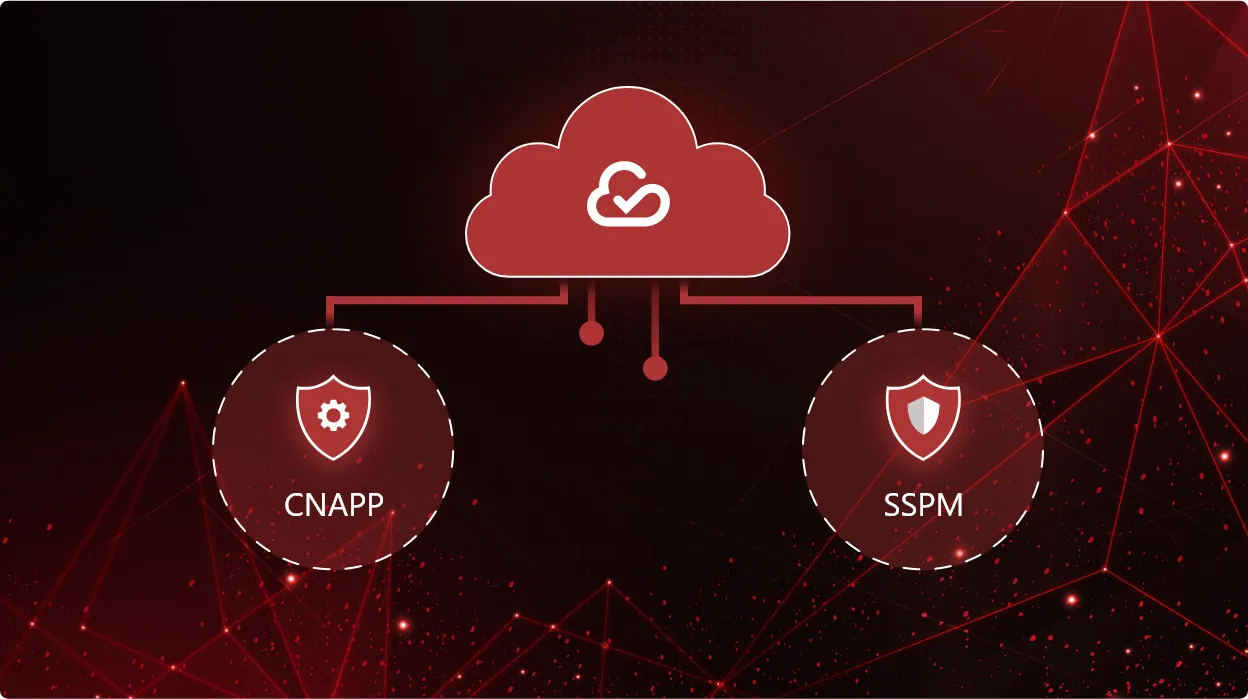
CheckRed is built around this continuous model. Its platform brings cloud, SaaS, DNS, identity, certificates, and other security domains into a unified posture view, with continuous discovery, validation, risk prioritization, and guided remediation. Its cloud security capabilities cover environments including AWS, Azure, Google Cloud, and Linode, while its broader platform includes CSPM, CNAPP, CIEM, CWPP, KSPM, SSPM, DNSPM, DDoSPM and continuous compliance.
That unified visibility is important because the blind spot is often created between tools. If cloud posture lives in one dashboard, identity risk in another, SaaS exposure somewhere else, and DNS or certificate posture in another platform, teams can end up seeing thousands of individual findings without understanding the relationships between them.
The objective should be fewer disconnected findings and more actionable risk context.
Turning Configuration Findings Into Actionable Risk
The cybersecurity industry has become highly effective at identifying configuration issues. The next challenge is understanding which issues have the potential to spread across connected systems. That requires security and infrastructure teams to evaluate not only individual findings, but also the dependencies, failure paths, and architectural changes surrounding them.
GitHub’s incident offers an important reminder: resilient architecture is not built by eliminating every possible defect. Complex environments will always contain hidden weaknesses. True resilience comes from preventing those weaknesses from converging into a cascading failure.
For security leaders, this means posture management must be continuous, contextual, and connected to the broader technology architecture. CheckRed supports this approach by continuously discovering the environment, identifying configuration and posture gaps, prioritizing risk, providing guided remediation, and maintaining visibility across the cloud and its connected ecosystem.
The goal is not to generate another list of alerts. It is to expose the critical intersections where a seemingly minor configuration issue, combined with an overlooked dependency, can create an outsized business impact.
GitHub’s outage demonstrates why this distinction matters. The most dangerous cloud configuration is not always the one that is obviously wrong. Sometimes, it is the one that appears correct—until the system around it changes.