Security Tool Consolidation Without Coverage Gaps: A Practical Framework for CISOs
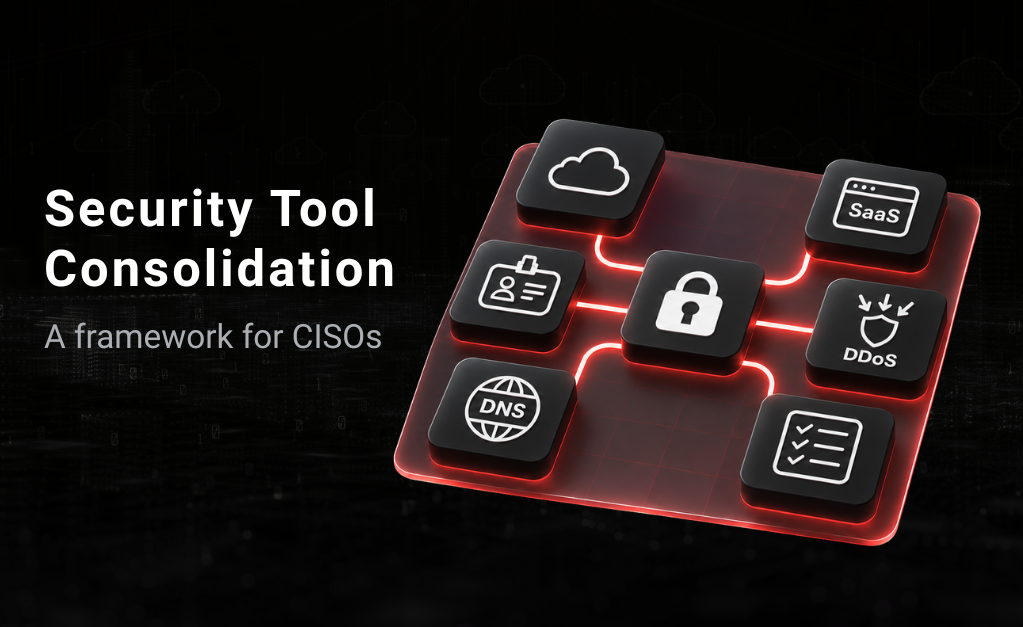
Security tool consolidation is the process of reducing overlapping cybersecurity products and connecting critical security capabilities through a more unified operating model. Done well, it lowers complexity, improves risk visibility and helps security teams respond faster. Done poorly, it simply trades tool sprawl for vendor dependency—and can leave important coverage gaps behind.
Gartner’s research on cybersecurity platform consolidation highlights the complexity, overlap, and blind spots created by multiple security vendors and tools. Every product may solve a legitimate problem, yet the collective result is often more dashboards, duplicated findings, inconsistent risk scoring and fragmented workflows.
The goal of consolidation should not be to force every security function into one product. It should be to create a clearer, more connected view of risk—and determine which tools genuinely improve security outcomes.
Why Security Tool Sprawl Creates More Than an Efficiency Problem
Security stacks rarely become fragmented overnight. A new cloud environment creates the need for cloud posture management. SaaS adoption introduces a separate layer of configuration and access risk. Identity, DNS, certificates, DDoS protection and compliance each bring their own tools, teams, and data.
Individually, those investments make sense. The problem appears between them.
A risky SaaS permission may be reviewed in one console. The identity behind it may be monitored somewhere else. A related cloud misconfiguration, exposed DNS record, or failed compliance control may live in another system entirely. When no one can see those relationships together, teams are left to assemble the full picture manually.
Tool sprawl can lead to:
- Duplicated or conflicting findings
- Inconsistent risk scoring across platforms
- More alerts without more clarity
- Security data trapped in separate workflows
- Overlapping licenses and underused capabilities
- Slower investigations and remediation
- Manual compliance evidence collection
- Gaps that remain hidden between security domains
Gartner describes complexity, overlap and blind spots as central challenges created by multiple cybersecurity tools and vendors. Consolidation can address those problems—but only when it is driven by coverage and outcomes rather than an arbitrary target for reducing vendor count.
What Does Security Tool Consolidation Actually Mean?
Security tool consolidation means evaluating the capabilities, costs, workflows and outcomes of the current security stack, then eliminating unnecessary overlap and connecting the capabilities the organization still needs.
There are three common approaches:
- Vendor consolidation: Reducing the number of security vendors and contracts.
- Platform consolidation: Moving multiple capabilities onto a broader cybersecurity platform.
- Operational consolidation: Connecting data, risk context and workflows across tools without necessarily replacing every underlying product.
Most organizations need a combination of all three. Vendor reduction may lower procurement overhead. Platform consolidation can simplify administration. Operational consolidation connects risks that still span multiple technologies and owners.
This is why “one platform” should not automatically mean “one vendor for everything.” The more useful question is: Can our team see, prioritize and act on risk across the environment without manually connecting dozens of separate findings?
How to Consolidate Security Tools Without Creating Coverage Gaps
1. Inventory capabilities—not just products
A list of vendors is not enough. Document what each product actually does, which environments it covers, who owns it, how often it is used and what decisions depend on its data.
For each tool, capture:
- Security capability and use cases
- Assets and environments monitored
- Business owner and operational owner
- Integrations and downstream workflows
- Contract and renewal date
- Utilization and adoption
- Findings produced and actions enabled
- Regulatory or audit dependencies
This separates genuine duplication from tools that look similar but protect different assets or workflows.
2. Map coverage across the entire IT ecosystem
Consolidation decisions cannot be made one security domain at a time. Build a coverage map across cloud infrastructure, SaaS applications, identities, Active Directory, DNS, certificates, DDoS defenses and compliance controls.
Look for three conditions:
- Overlap: Multiple tools perform substantially the same function.
- Fragmentation: Necessary capabilities exist, but their findings are isolated.
- Gaps: Important assets, risks or controls are not continuously monitored.
This exercise often reveals that the biggest problem is not a complete lack of security data. It is the inability to see related risk in one context.
3. Evaluate outcomes instead of feature lists
Long feature lists can make overlapping tools appear equally valuable. Measure whether each one improves an operational or security outcome.
Ask:
- Does this tool identify risks that another product misses?
- Does it help the team determine what matters most?
- Can its findings be acted on quickly?
- Does it reduce manual work?
- Is its data used in investigations, remediation or compliance reporting?
- Would removing it eliminate a critical control or merely another dashboard?
A product that generates thousands of findings but does not support prioritization or action may add less value than its feature list suggests.
4. Test the connections between domains
Modern risk rarely stays within a single technology layer. An exposed cloud workload may connect to an overprivileged identity. A SaaS misconfiguration may create a compliance gap. A dangling DNS record or unmanaged certificate may expose an internet-facing asset that looks healthy in another console.
Before retiring a tool, test whether the proposed platform can connect these risks across domains. A consolidated dashboard that simply places separate alerts side by side is not the same as unified posture management.
The platform should help answer:
- Which risks affect the same asset, identity or business service?
- Which findings create the greatest combined exposure?
- Which compliance controls are affected?
- What should be addressed first?
- Who owns the next action?
5. Preserve integrations and open workflows
Consolidation should simplify the security architecture without isolating it. Favor platforms that work with the organization’s existing SIEM, SOAR, GRC, XDR, ticketing and collaboration systems.
Open integrations help teams retain the specialized tools that provide real value while reducing the manual work required to connect their findings. They also reduce the risk of replacing one fragmented stack with a closed ecosystem that is difficult to change later.
6. Measure the result continuously
Security consolidation is not finished when a contract is cancelled. Track whether the new operating model produces better outcomes.
Useful metrics include:
- Number of products and vendors retired
- License and operational costs avoided
- Percentage of critical assets continuously monitored
- Duplicate findings eliminated
- Time required to prioritize and assign risk
- Time from finding to remediation
- Manual hours spent collecting compliance evidence
- Number of uncovered security or compliance gaps
The best consolidation programs improve both efficiency and risk posture. If vendor count falls but teams lose visibility or control, the program has not succeeded.
Consolidation vs. Unification: Why the Difference Matters
Consolidation reduces the number of tools. Unification improves how security information works together.
An organization can consolidate from 30 vendors to 10 and still have fragmented risk data. Conversely, it may retain several specialized controls while using a unified posture layer to connect assets, findings, identities and compliance requirements.
For many teams, the practical answer is not to replace every tool. It is to establish a shared control plane that:
- Provides consistent visibility across security domains
- Normalizes and prioritizes findings
- Connects technical risk to compliance controls
- Gives teams contextual, guided remediation
- Integrates with established security and IT workflows
That approach reduces operational fragmentation while allowing the organization to preserve the controls that are working.
How CheckRed Supports Smarter Security Consolidation
CheckRed unifies security posture and continuous compliance across cloud, SaaS, DNS, certificates, DDoS and identity environments. Instead of requiring security and compliance teams to interpret each domain separately, the platform provides centralized visibility, prioritized findings and guided remediation.
CheckRed helps organizations:
- Identify posture gaps across critical infrastructure layers
- Connect security findings with compliance requirements
- Prioritize risk using shared context
- Reduce duplicated monitoring and manual analysis
- Give owners step-by-step remediation guidance
- Integrate findings into existing SIEM, SOAR, GRC, XDR and ticketing workflows
- Maintain continuous, audit-ready compliance visibility
The objective is not consolidation for its own sake. It is a security program in which teams can understand what is exposed, see how risks are connected and focus limited resources on the actions that matter most.
Start With Visibility Before You Remove a Tool
Security leaders are under pressure to reduce costs and complexity, but removing products before understanding their coverage can create more risk than it resolves.
Start by mapping the tools, assets, controls and workflows you already have. Identify true overlap. Find the gaps between domains. Then determine where a unified platform can simplify operations without weakening protection.
Because the real measure of security tool consolidation is not how many products you remove. It is how much more clearly—and confidently—you can manage risk afterward.
Ready to see where fragmented tools may be creating hidden gaps? Request a CheckRed demo to explore unified security posture and continuous compliance across your IT ecosystem.