6 Places Pharma Data Goes That Security Teams Can’t Always See
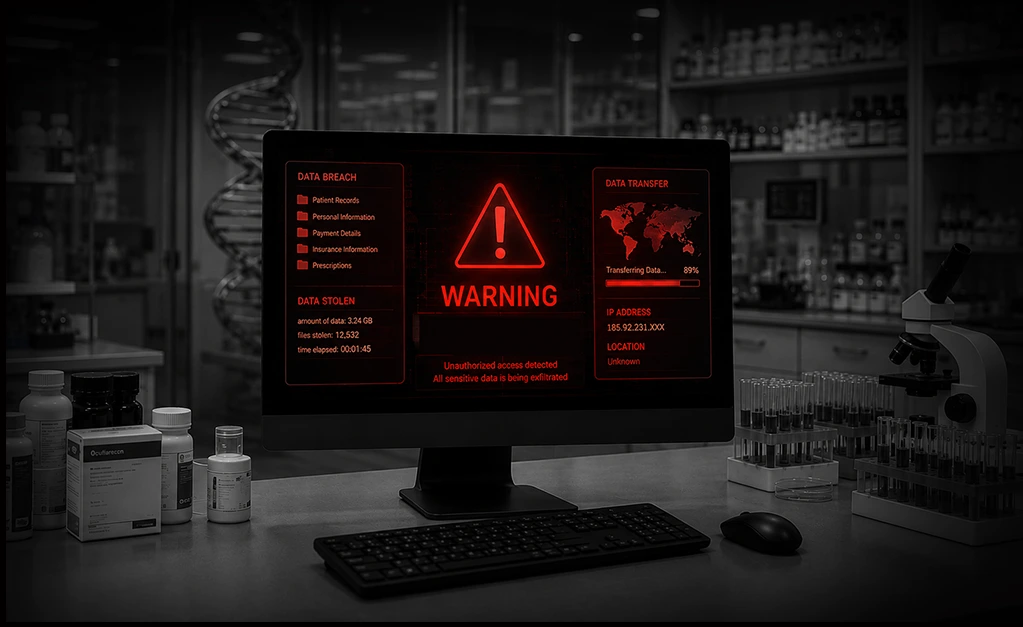
Executive Summary: Pharmaceutical companies are moving sensitive patient, research, clinical, and intellectual property data across an increasingly distributed digital ecosystem. The recent Amgen cloud incident is a reminder that data can leave traditional security boundaries long before security teams realize it. The challenge is maintaining continuous visibility wherever data, identities, applications, and infrastructure connect. In this blog, we examine six places pharma data can go unnoticed.
The Pharma Attack Surface Has Become a Data Journey
For decades, the security perimeter in life sciences was relatively straightforward: protect the data center, secure endpoints, control network access, and restrict physical access to sensitive systems. That model is becoming harder to defend.
Today, a pharmaceutical company’s most valuable information may move through public cloud environments, research applications, collaboration platforms, identity providers, APIs, third-party systems, and internet-facing infrastructure—sometimes within the same workflow.
The recent Amgen incident illustrates the stakes. The company said data, including proprietary information and patient-protected health information, was exfiltrated from cloud environments operated by third-party service providers. Amgen is continuing to investigate the incident and has not publicly disclosed the specific cloud providers or initial compromise mechanism.
Security teams that work in pharma and life sciences need to know where sensitive data is moving before an attacker does. Here are six places where that visibility can disappear.
1. Cloud Environments
Cloud has transformed how pharmaceutical companies develop, test, analyze, and deliver products. But every new cloud account, storage resource, workload, permission, and configuration expands the number of places where sensitive information can reside.
A single misconfiguration can turn a legitimate business resource into an unintended exposure. The challenge becomes even greater in multi-cloud environments, where different teams may manage different accounts and configurations.
Cloud security posture management is therefore not simply about checking whether an environment is “secure.” It is about continuously understanding what exists, how it is configured, who can access it, and whether that posture has changed.
2. SaaS Applications
Research teams, clinical operations, legal departments, finance, HR, and commercial teams all rely on SaaS. That means sensitive information can end up in collaboration platforms, file-sharing services, CRM systems, project-management tools, and other applications that may sit outside the traditional security team’s field of view.
The risk isn’t necessarily an obvious malicious application. It can be a perfectly legitimate SaaS platform with an overly broad permission, an exposed file, a dormant account, or an insecure integration. For security leaders, SaaS needs to be treated as part of the data environment—not as someone else’s application problem.
3. Third-Party Platforms
Pharma companies operate through extensive ecosystems of research partners, contract organizations, technology providers, healthcare organizations, and other suppliers. When data moves into a third-party environment, the organization’s operational control may decrease, but its risk does not disappear.
This is where visibility becomes particularly important. Security teams need to understand not only which vendors have access, but what information is exposed, which identities can reach it, and whether the security posture of those connected environments changes over time.
4. Employee and Service Identities
Data doesn’t access itself. People, applications, APIs, service accounts, and other machine identities access it. That makes identity one of the most important—and frequently overlooked—paths into sensitive data.
An employee with excessive privileges, a dormant account that remains active, or a non-human identity with more access than it requires can create a route into systems that may contain valuable information. The problem becomes harder when identity information is spread across cloud and SaaS environments.
5. APIs and Integrations
Modern pharma relies on systems talking to other systems. APIs connect applications, research platforms, data repositories, analytics environments, and business services. Those connections are essential to innovation—but each one creates another relationship that needs to be understood.
An integration can have legitimate access while still becoming a security liability if permissions are excessive, credentials are poorly managed, or the connected system changes its configuration.
6. DNS and Internet-Facing Infrastructure
DNS rarely gets the attention given to cloud or identity, yet it is part of the infrastructure that makes digital businesses reachable. Domains, DNS records, certificates, and internet-facing services can change frequently as organizations launch applications, migrate infrastructure, or integrate new providers. A forgotten record, expired certificate, or misconfiguration can create exposure—or provide attackers with an opportunity to disrupt operations or redirect traffic.
That makes DNS visibility part of broader security visibility. CheckRed’s DNS Posture Management continuously monitors DNS providers for configuration issues, certificate risks, and domain-related exposures alongside its cloud and SaaS security capabilities.
Security Starts With Knowing What’s Exposed.
The common thread across all six areas is not technology. It is visibility.
Pharma organizations don’t necessarily need fewer digital systems. They need a clearer understanding of how those systems connect, where sensitive data can travel, which identities can reach it, and where posture is changing.
That is difficult when security teams have separate tools for cloud, SaaS, identity, DNS, compliance, and workloads. CheckRed’s approach is to unify posture visibility across these environments, prioritize the risks that matter most, and provide guided remediation rather than simply adding another stream of alerts.
Conclusion: You Can’t Secure What You Can’t See
The future of pharma security will not be defined by how effectively organizations protect a single cloud environment. It will be defined by how well they understand the connections between environments. Data will continue to move. Applications will continue to multiply. Third parties will continue to become more deeply embedded in the research and business ecosystem.
The security advantage belongs to organizations that can see those relationships continuously and act on the risks they reveal. CheckRed plays a meaningful role here. By bringing cloud, SaaS, DNS, identity, and compliance posture into a unified view, CheckRed helps security teams replace fragmented visibility with a clearer picture of where risk actually lives, and what needs to be fixed first.