How a Stolen SSO Login Led to Millions of Records Exposed in Retail
When news broke that Panera Bread had suffered a major data breach impacting more than five million customers, the headlines focused on the outcome: exposed records, extortion demands, and customer data circulating online.
But beneath the headlines lies a more important lesson for security teams.
This wasn’t just a retail breach. It was an identity breach.
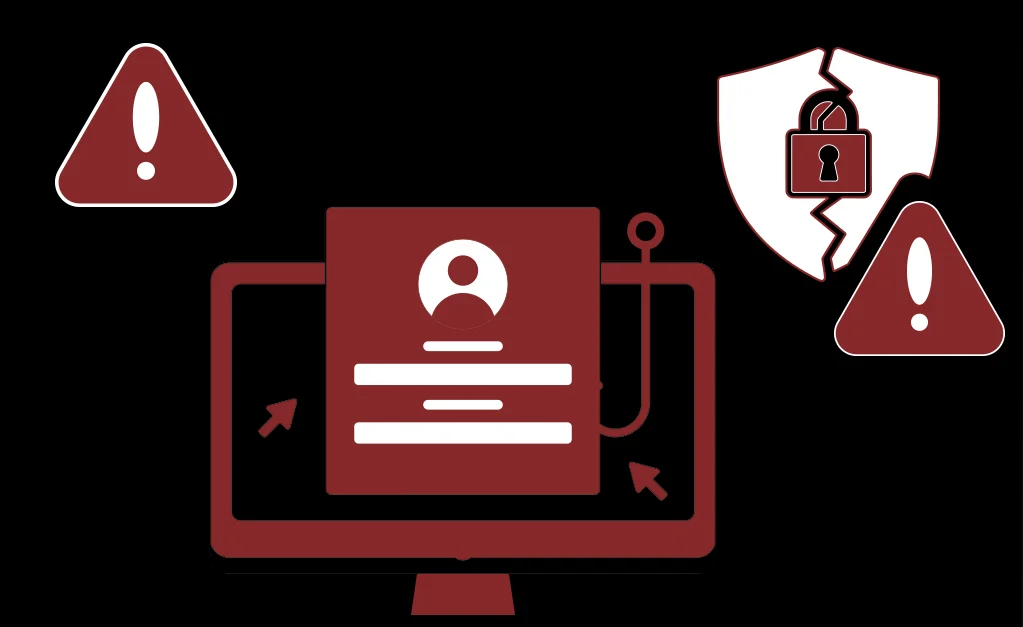
Attackers reportedly gained access through Microsoft Entra single sign-on (SSO), then moved through systems to extract customer records at scale. That detail matters, because it reflects how modern attacks increasingly unfold—not through malware first, but through compromised identities.
Today, SSO is often the front door to everything. And for retail organizations, that creates an enormous blast radius.
1. SSO Is Now the Front Door to Your Entire Retail Environment
SSO is designed to simplify access. One login grants entry to dozens of applications, cloud platforms, and internal systems. From an attacker’s perspective, that’s incredibly efficient.
Groups like ShinyHunters understand this well. Once an SSO account is compromised, they can pivot across customer platforms, marketing tools, cloud infrastructure, and internal dashboards—often without triggering traditional security controls.
This incident also appears tied to broader voice-phishing campaigns targeting major identity providers such as Okta and Google SSO. The message is clear: attackers are going after identity first. Because if they own your SSO, they effectively own your environment.
2. Retail’s Distributed Systems Create a Massive Blast Radius
Retail environments are inherently complex. They span customer-facing apps, loyalty platforms, ordering systems, marketing SaaS, analytics tools, and cloud backends. Each platform holds a piece of customer data. Each relies on shared identities to function. Once attackers gain SSO access, lateral movement becomes easy.
They don’t need to exploit every system individually. They simply authenticate, enumerate what’s available, and begin harvesting data. This interconnectedness is what turns a single compromised login into a multi-million-record breach.
And unlike traditional perimeter-based attacks, there may be no obvious “break-in.” Everything looks like legitimate access—until the data is already gone.
3. Modern Retail Breaches Are Extraction-First
In the Panera incident, attackers didn’t focus on encrypting systems. They focused on stealing data. According to Have I Been Pwned?, the leaked dataset included over 5.1 million unique email addresses, along with names, phone numbers, and physical addresses. This reflects a growing trend.
Many threat actors now skip ransomware entirely. Instead, they quietly exfiltrate data and attempt extortion afterward. It’s cheaper to execute, faster to monetize, and often harder to detect. For defenders, this changes everything. You can’t rely on outages or locked systems as warning signs anymore. By the time customers are notified, attackers have usually completed their objective.
4. Cloud Misconfigurations Accelerate Identity-Based Attacks
While identity compromise opens the door, cloud misconfigurations often widen it.
Common risk amplifiers include:
- Over-permissioned accounts
- Excessive access between applications
- Poorly monitored integrations
- Weak privilege boundaries
- Forgotten service accounts
Each of these creates opportunities for attackers to escalate quickly once inside.
Cloud Security Posture Management (CSPM) helps reduce these risks by identifying:
- Misconfigurations
- Risky IAM policies
- Excessive permissions
- Exposed resources
- Access drift
But that alone isn’t enough.
Because even well-configured environments can be compromised through stolen credentials or social engineering. That’s why cloud security must extend beyond configuration into continuous monitoring of how identities and resources are actually being used.
5. Retail Customer Data Is a High-Value Target
Retail organizations aggregate enormous volumes of personal information: emails, phone numbers, addresses, purchase histories, and loyalty profiles. That data is valuable on its own—and even more valuable when bundled at scale.
Attackers know this. It’s why retail brands are increasingly targeted through identity-based attacks rather than technical exploits. Customer platforms and SaaS applications become collection points, and SSO becomes the fastest way to reach them.
Protecting this data requires more than perimeter defenses. It requires visibility into:
- Who is accessing customer data
- From where
- Under what role
- At what volume
- With what behavior pattern
6. Why Retail Security Must Unify SaaS, Cloud, and Identity
What makes incidents like this especially challenging is that they don’t stay confined to one environment. They start with identity. They move through SaaS. They touch cloud infrastructure. They end with data exfiltration.
Yet many organizations still secure these layers separately.
Attackers don’t respect those boundaries.
Effective defense requires correlating:
- Identity events
- SaaS activity
- Cloud configuration
In real time—so suspicious patterns emerge early, not after customer data appears on leak sites.
7. Key Lessons for Retail Security Teams
The Panera breach reinforces several fundamental principles:
- Treat SSO as critical infrastructure
- Monitor identity behavior continuously
- Reduce cloud misconfigurations and excessive permissions
- Enforce least privilege across SaaS and cloud
- Reduce excessive permissions and role sprawl
- Detect abnormal access to customer data
- Watch for high-volume data extraction
- Assume attackers will move laterally once inside
These fundamentals won’t eliminate risk. But they dramatically reduce the likelihood that a single compromised login turns into a massive breach.
Identity Is the New Perimeter
This incident didn’t begin with malware. It began with compromised identity—and escalated because abnormal access and data activity weren’t detected quickly enough. That’s the reality of modern retail security.
Stopping these breaches requires:
- Continuous SaaS security monitoring
- Cloud posture visibility
- Identity risk detection
- Real-time behavioral analytics
- Early detection of data exfiltration
Not after-the-fact forensics.
Not quarterly audits.
Continuous visibility.
How CheckRed Helps Retail Security Teams Stay Ahead
CheckRed unifies visibility across cloud, SaaS, and identity environments to help retail organizations:
- Detect exposed or over-permissioned identities
- Monitor abnormal SSO activity
- Identify risky SaaS integrations
- Surface excessive access to customer data
- Detect suspicious lateral movement
- Prioritize identity-driven risk
Instead of discovering breaches after millions of records are exposed, security teams can intervene at the first sign of abnormal identity behavior.
Because in modern retail security, protecting customer trust starts with protecting identity.