The Day a Routine DNS Change Became a Global Incident
Executive Summary
A routine DNSSEC key rollover at Germany’s .de top-level domain (TLD) triggered a widespread internet disruption on May 5, 2026, causing DNSSEC-validating resolvers to reject millions of legitimate DNS queries. The incident was not the result of a cyberattack, malware, or infrastructure failure. It stemmed from a misconfiguration in a trusted security control.
In this article, we learn three important lessons from this event: security technologies can become sources of disruption when misconfigured, DNS remains a critical single point of dependency for digital services, and organizations need continuous visibility into DNS risk, not just external threats.
An Unexpected Outage
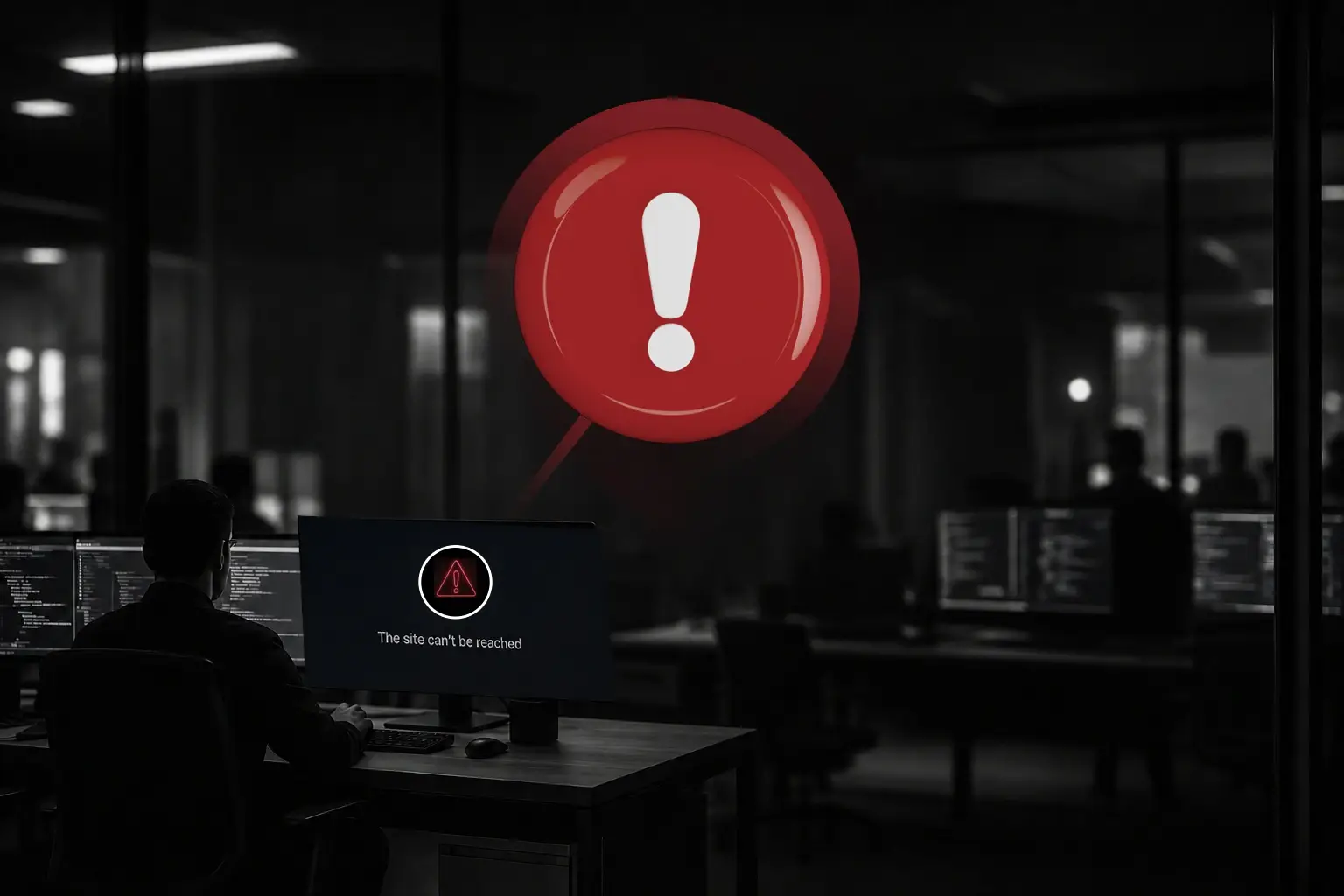
For a few hours on May 5, 2026, users found themselves unable to access most websites with a .de address. However, this was not a result of a cyberattack, ransomware, a DDoS campaign, or even a cloud outage. Instead, the trigger was a routine maintenance activity.
Germany’s .de country-code top-level domain (TLD), operated by DENIC, began publishing invalid DNSSEC signatures during a scheduled key rollover process. The mistake caused validating DNS resolvers around the world to reject legitimate responses, making millions of domains under .de unreachable for many users.
The incident is a reminder that some of the largest disruptions in modern infrastructure do not originate from attackers. They originate from trusted systems performing exactly as (mis)configured!
What Actually Happened?
To understand the impact, it’s important to understand the role DNSSEC plays in the Domain Name System. DNSSEC was designed to protect users from tampered DNS responses. It does this through cryptographic signatures that allow resolvers to verify that DNS records are authentic and have not been modified.
The system relies on a chain of trust. The root zone trusts the TLD. The TLD trusts the domain. The domain trusts its records. If any link in that chain becomes invalid, validation fails.
During a scheduled DNSSEC key rollover, DENIC unintentionally published signatures that could not be validated correctly. DNS resolvers that perform DNSSEC validation, including major public resolvers, were required to reject those responses and return SERVFAIL errors.
Ironically, DNSSEC did not fail. It worked exactly as designed. The problem was that the signatures being verified were incorrect.
Why One Mistake Affected Millions of Domains
Most outages remain isolated to a single application, service, or organization. DNS operates differently. The internet’s naming system is hierarchical by design. Every domain depends on the layers above it functioning correctly.
Individual organizations hosting .de domains did nothing wrong. Their infrastructure remained operational. Their websites remained online. Yet many users could not reach them because a problem higher in the DNS trust chain prevented successful resolution.
This is one of the defining characteristics of DNS risk. A failure in a trusted dependency can cascade across thousands or even millions of unrelated organizations simultaneously.
Misconfigurations Remain One of Cybersecurity’s Biggest Blind Spots
Cybersecurity discussions often focus on malicious actors. We invest heavily in detecting phishing campaigns, ransomware operators, credential theft, and advanced persistent threats. Those risks are real. But some of the most disruptive incidents originate from something much simpler: misconfigurations.
Over the last decade, organizations have experienced major outages caused by expired certificates, cloud configuration errors, routing mistakes, and DNS changes gone wrong. The .de DNSSEC incident belongs in that category.
No attacker exploited a vulnerability.
No malicious actor bypassed defenses.
A routine operational process introduced an error into a trusted security mechanism, and the consequences rippled across the internet.
Why DNS Security is About More Than Threat Detection
For many organizations, DNS security is still viewed primarily through the lens of threat prevention. Teams focus on blocking malicious domains, detecting phishing infrastructure, or identifying suspicious activity. Those capabilities are important, but they represent only part of the picture.
Resilience requires visibility into the health and security of DNS itself. Questions security teams should be able to answer include:
- Are DNSSEC configurations valid and functioning correctly?
- Are there misconfigured DNS records creating operational risk?
- Are delegation chains configured properly?
- Are critical DNS assets exposed to failure?
- Has configuration drift introduced new vulnerabilities?
These questions fall under a broader discipline known as DNS Posture Management (DNSPM). Rather than focusing solely on active threats, DNSPM focuses on identifying weaknesses, exposures, and misconfigurations before they become incidents.
From DNS Monitoring to DNS Posture Management
Traditional DNS monitoring answers a straightforward question: “Is something broken?”
DNSPM asks a more valuable question: “What could break next?”
The distinction is important because by the time traditional monitoring detects an outage, users are already affected. DNSPM takes a proactive approach by continuously evaluating DNS assets, configurations, dependencies, and trust relationships to identify risks before they impact operations. That includes issues such as:
- DNSSEC misconfigurations
- Dangling DNS records
- Shadow DNS assets
- Weak delegation chains
- Expired records and certificates
- Configuration drift
The goal is not simply detecting incidents. It is reducing the likelihood of incidents occurring in the first place.
Final Thoughts
The .de outage demonstrated how a single configuration error in a trusted system can ripple across millions of domains in a matter of hours. It also reinforced an important reality about cybersecurity and resilience: not every disruption begins with an attacker.
Sometimes the greatest risks emerge from routine changes, trusted processes, and overlooked dependencies. Organizations cannot control every external dependency within the global DNS ecosystem. However, they can gain visibility into the DNS risks that exist within their own environments.
That’s where CheckRed’s DNS Posture Management (DNSPM) solution comes in.
CheckRed DNSPM continuously discovers DNS assets, identifies misconfigurations, validates DNS security controls, detects exposure risks, and helps organizations prioritize remediation before issues become outages or security incidents.
Want to understand your organization’s DNS risk before it becomes tomorrow’s outage? Explore CheckRed DNSPM and gain continuous visibility into the exposures hiding within your DNS environment.