When One SaaS Platform Fails: The Hidden Risk of Digital Dependency
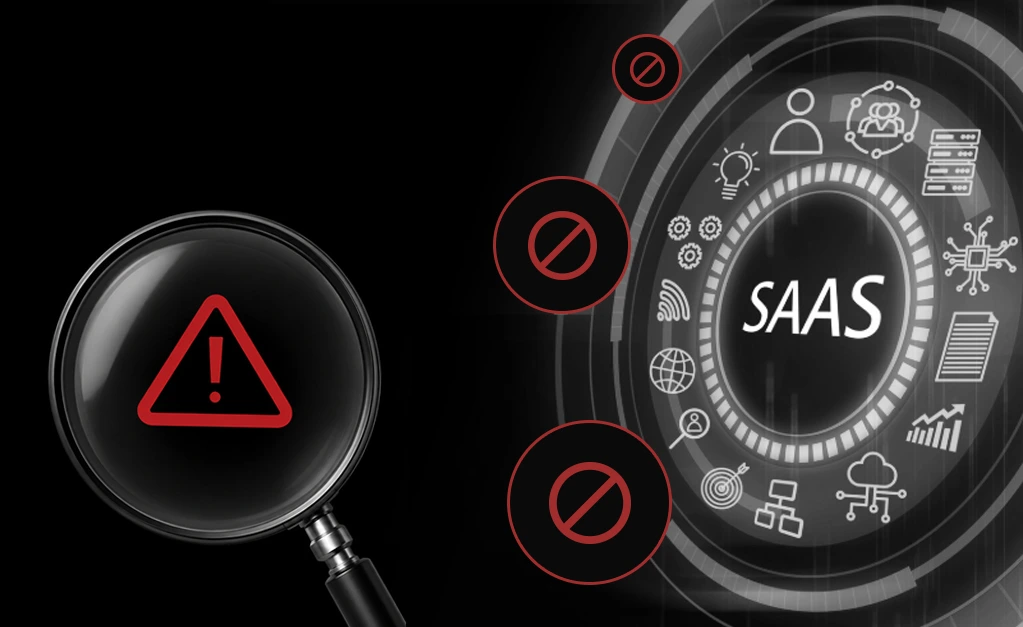
Executive Summary: The Canvas breach underscores a broader reality facing every organization: as SaaS platforms become mission-critical, a single compromised application can disrupt operations far beyond the initial security incident. The real challenge is maintaining continuous visibility into the identities, permissions, and integrations that define today’s interconnected SaaS ecosystems. Organizations that understand and manage these hidden dependencies are far better positioned to strengthen resilience before a trusted platform becomes their weakest link.
A few months ago, thousands of students sat down to take online exams, submit assignments, or check announcements from their professors. Instead of course materials, they were greeted by a ransom message.
Within hours, universities around the world were extending deadlines, postponing examinations, disconnecting systems, and searching for alternative ways to communicate with students. What began as a cybersecurity incident had quickly become an operational crisis, affecting thousands of institutions and millions of users who depended on a single cloud platform to keep education running.
The Canvas breach made headlines because of its scale. More than 8,000 educational institutions were reportedly affected, and the attackers claimed to have accessed data belonging to hundreds of millions of users. Yet the incident offers a lesson that extends far beyond education. Every organization today depends on a growing ecosystem of SaaS applications to run its business, and every one of those applications represents not just a productivity tool, but a potential point of failure.
1. Every Breach Starts With A Blind Spot
Like many major cyber incidents, the breach did not begin with widespread disruption. It began quietly. An unauthorized actor gained access to Canvas systems, and although the intrusion was eventually detected and contained, sensitive information (including names, email addresses, student IDs, and user communications) had already been exposed. At that stage, the conversation largely revolved around what data had been accessed and whether passwords or financial information had been compromised.
This is where many organizations naturally focus their attention. They want to know what was stolen. But security teams should be asking a different question: How much did we know about the application before the attacker got there?
Modern SaaS platforms often store years of sensitive business information, integrate with dozens of other applications, and become deeply embedded in daily operations. Yet many organizations have limited visibility into the permissions, integrations, and identities connected to those platforms.
Continuous SaaS visibility is no longer simply about inventory management. It is about understanding where sensitive business data resides, who can access it, and how those access paths evolve over time. Without that visibility, every organization is operating with blind spots that attackers are increasingly willing to exploit.
2. The Business Then Starts to Feel the Impact
The most remarkable aspect of the Canvas breach wasn’t simply the data that may have been stolen. It was how quickly the incident disrupted everyday operations.
Canvas had become the primary channel for coursework, examinations, grading, faculty announcements, student communication, and administrative coordination. When it became unavailable, institutions were forced to improvise almost immediately. Professors resorted to email, examinations were postponed, assignment deadlines were extended, and support teams scrambled to restore normal operations.
Every organization has its own version of Canvas. For some, it’s Microsoft 365. For others, it might be Salesforce, ServiceNow, GitHub, Slack, Workday, or another cloud platform that employees rely on every hour of every day. These applications have evolved from productivity tools into business infrastructure, yet many organizations still view them through a traditional IT lens rather than a business continuity lens.
One of the most valuable exercises any security team can undertake is identifying which SaaS platforms the organization simply cannot operate without. Understanding that dependency is the first step toward managing the risk that comes with it.
3. Behind Every SaaS Application Is an Even Larger Web of Trust
Modern cloud platforms rarely operate in isolation. They connect to identity providers, HR systems, collaboration tools, APIs, third-party applications, and countless integrations designed to make work more efficient. Every new connection introduces another trust relationship, another permission set, and another pathway that could potentially be abused if left unmanaged.
That complexity is often invisible until something goes wrong.
The Canvas incident serves as a reminder that organizations are no longer securing individual applications—they are securing ecosystems. As SaaS environments continue to grow, so does the attack surface surrounding them. Shadow applications appear, unused integrations remain active, privileged permissions accumulate, and third-party accounts retain access long after their original purpose has disappeared.
Continuous visibility into those relationships is becoming just as important as identifying software vulnerabilities. Security teams need to understand not only where risk exists, but how it can spread across interconnected cloud environments.
4. Recovery Isn’t the End of the Story
Canvas eventually returned online, and institutions gradually resumed normal operations. From the outside, the incident appeared to be over. In reality, recovery marks the beginning of a different set of security questions.
What information was actually accessed? Which accounts or identities interacted with the compromised environment? Were unnecessary permissions reviewed? Which third-party integrations still have access? Have dormant accounts and excessive privileges been reassessed in light of the incident?
These questions rarely generate headlines, yet they determine whether an organization emerges stronger from a breach or unknowingly carries forward the same risks. This is why continuous monitoring matters just as much after an incident as before one. Visibility cannot stop once systems are restored; it needs to become part of an organization’s ongoing security strategy.
A Lesson Every Organization Should Take From Canvas
The Canvas breach will undoubtedly be remembered as one of the largest cybersecurity incidents to impact the education sector. However, its most important lesson applies to all industries.
It demonstrated how deeply organizations now depend on cloud applications that have quietly become mission-critical infrastructure. It also showed that when one trusted platform is compromised, the consequences extend far beyond data loss. Business continuity, productivity, communication, customer trust, and operational resilience can all be affected simultaneously.
As organizations continue expanding their SaaS footprint, securing individual applications is no longer enough. Security teams need continuous visibility into the entire SaaS ecosystem—understanding not only which applications are in use, but also how they connect, what permissions they hold, and where hidden risks are accumulating over time.
Solutions like CheckRed enable organizations to move beyond reactive incident response by uncovering hidden exposures, monitoring permissions and integrations, and providing the insight needed to reduce SaaS risk before the next trusted platform becomes a major breach.
Get in touch to explore what we can do for you!